
The birth of the kids is the most exciting and most awaited period for us farmers, it is the beginning of the new season of productivity, therefore we follow very carefully all the phases that precede it until the birth of the kid, its cleaning and feeding time.
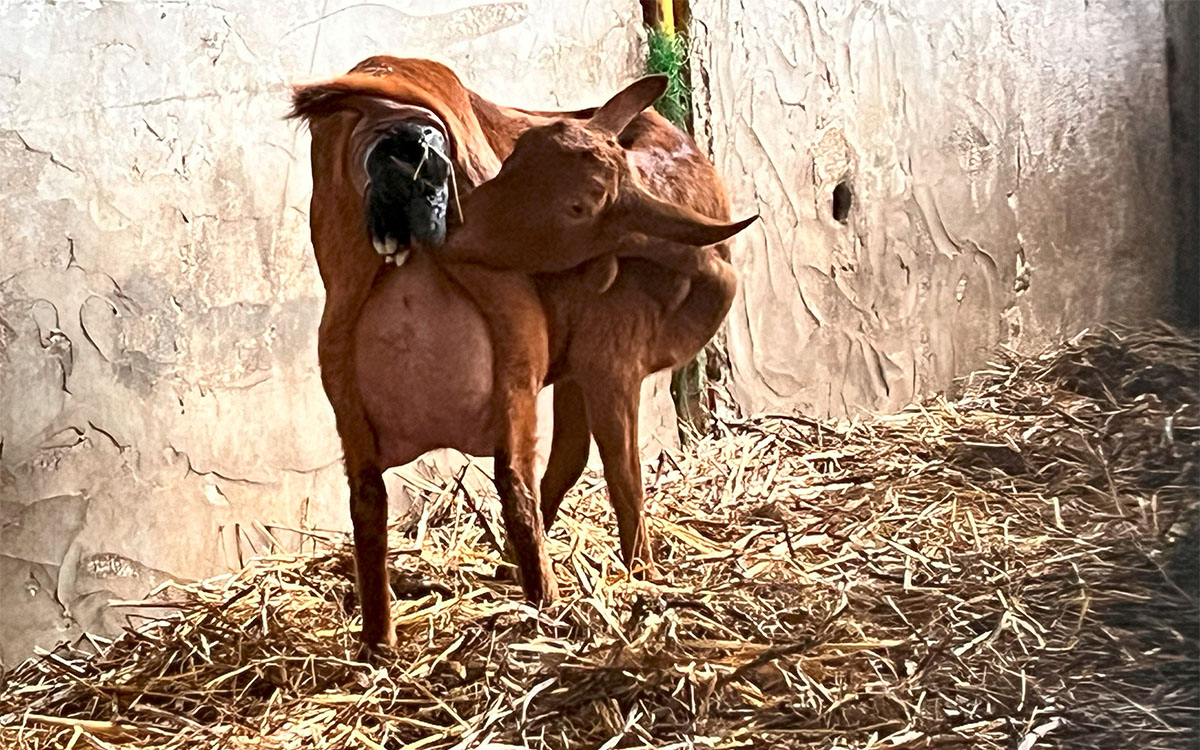
The goat has a gestation that lasts an average of 153 days and begins to show signs of preparation for birth in the last month when the volume of the udder and abdomen increases.
In the last stages you notice the presence of white, sticky, odorless mucus that comes out of the vulvar rim and smears the tail, starting from a week before giving birth; if it appears dirty with blood, with an unpleasant appearance and smell, it is possible that there are anomalies in the gestation and problems with childbirth.
At the end of gestation and preparation for birth, the goat appears restless and anxious, it is our task to keep it under observation and prevent the onset of any problems.
During this phase the first weak and irregular contractions begin, the tone of the uterine muscles decreases, the organ relaxes and the fetus assumes the correct position for birth.
In the second phase called Dilactation, the fetus inside the amniotic sac progresses outwards following the rhythm of the contractions which have become more frequent and regular with the consequent breaking of the waters.
In the last phase called Expulsive, the goat lies down to exert more energetic pushes, the kid’s front feet begin to appear and the leakage of the liquid favors the lubrication of the birth canal. During this last phase the contractions increase in number and strength and if the position of the kid is correct there is no need to intervene in any way, allowing the birth to proceed naturally.
The removal of the head is the most difficult and painful step, it must not be forced to avoid causing lacerations and/or infections.
While waiting for the last contractions, the goat tries to regain its strength, often changes position and with a final push the fetus comes out completely.
After birth, the goat will clean the kid and immediately provide the essential food for its growth: Colostrum.
Every year we assist our goats during birth, we always try to be present when possible, we almost never interfere with the natural evolution of birth, except in cases of obvious anomaly.
Knowing and understanding your animal allows the breeder to anticipate the stages of birth, thus offering the goat the most natural and comfortable environment possible.